 Nala
NalaHow to help a toddler who is scared of the dark
Fear of the dark is a normal stage for toddlers and preschoolers, and it usually passes. What helps most is a calm, predictable bedtime, taking the fear seriously, and a warm, dim night light your child chooses.
Is it normal?
Yes. Being afraid of the dark, especially of being alone in it, is one of the most common childhood fears (1). Preschoolers often start to show fear of being on their own and of the dark (2). Around 2 to 5, imagination grows fast: a coat on a chair can become a monster once the lights go off. That's a sign of a developing mind, not of something wrong.
What helps
A predictable routine
Same steps, same order, every night: bath, pajamas, a story, a cuddle, lights down. When your child knows what comes next, there is less room for worry. Keep the last half hour calm and screen-free.
A template you can adapt. Times count back from lights out; change the steps, but keep the order the same every night.
| When | Step | Why it helps with the dark |
|---|---|---|
| 30 min before | Screens off, bath or wash | Starts the wind-down; no scary clips late in the day |
| 20 min before | Pajamas, teeth, toilet | Same order every night, so nothing feels uncertain |
| 15 min before | Goodnight tour of the room, light on | They see the corners and under the bed for themselves |
| 10 min before | Story in bed, main light dimmed | The room gets darker gradually, not all at once |
| 5 min before | They switch on their night light; cuddle and a set goodnight phrase | A bit of control, and a clear signal that you are close by |
| Lights out | Main light off, night light warm and low | Enough light to feel safe, dim enough for sleep |
Take the fear seriously
Saying "there's nothing there" rarely works on its own. Listen first, and name what they feel: "You're scared there's something in the corner." Then let them know you are close by and won't let anything harm them (3).
Show them together
Turn the light on and look in the corner, under the bed, behind the curtain, together. Seeing that the room is the same with the light off helps the imagination calm down. Some families make it a short game, a "goodnight tour" of the room.
A night light they choose
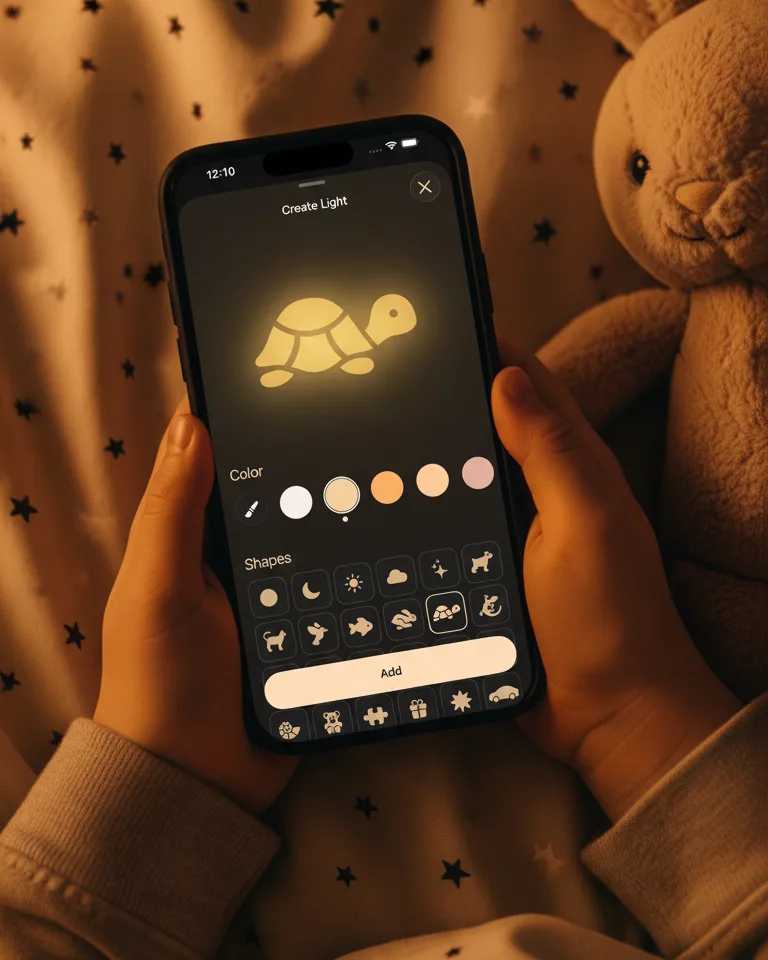
The American Academy of Pediatrics says you can let your child keep a light on if it makes them feel better (3), and a night light can help a scared child feel calmer and settle better (4). Two things make it work better:
- Let them choose it. A moon, a star, their favorite animal. Choosing gives them a bit of control over the dark.
- Warm and dim. In a small, preliminary study of young children, warm light suppressed melatonin, the hormone that helps us feel sleepy, less than half as much as cool light of the same brightness (5). Red, amber or warm white, turned down low.
Watch what they see during the day
Scary images in movies, online videos or games can feed fears at night. Keep an eye on what your child watches, especially in the evening (1).
What to avoid
- Mocking or shaming the fear ("you're a big kid now"). It doesn't make it go away, it just makes them hide it.
- Bright or blue light. A ceiling light or a cool white lamp left on all night works against sleep.
- A screen in the bed. A tablet or phone to play with at bedtime keeps them awake. If you use a phone as a night light, it stays out of reach.
- Making the bedroom a punishment place. The room should feel safe.
When to talk to your pediatrician
Most fears of the dark fade on their own. If your child's fear is intense, lasts for months, or gets in the way of everyday life, like sleep every night, daycare or playing, talk to your pediatrician (1, 2).
How Nala helps
I built Nala for my son's nights, and a night light for a child scared of the dark is one of the things it's made for. Your child picks a shape (moon, star, cloud, animal, teddy bear, 104 in all) and a warm color. The light can breathe slowly to help them calm down, and a sleep timer fades it out once they're asleep. The red, warm white and warm glow lights are free; shapes, animations and lullabies are part of Nala+. See how Nala works as a night light for a toddler scared of the dark.
Questions parents ask
At what age are toddlers scared of the dark?
Fear of the dark often shows up in the preschool years, around 2 to 5, when imagination grows faster than the ability to tell real from pretend. It is one of the most common childhood fears and usually fades with time.
Is it OK to leave a night light on for a toddler?
Yes. The American Academy of Pediatrics says you can let your child keep a light on if it makes them feel better. Choose a warm, dim light such as red, amber or warm white rather than blue or bright white.
Should I tell my child there's nothing to be scared of?
Don't dismiss the fear. Listen, name it, and then show together that nothing is there, for example by turning the light on and looking in the corner. Let them know you are nearby and will keep them safe.
When should I talk to a pediatrician about fear of the dark?
If the fear is intense, lasts for months, or gets in the way of daily life, such as sleep every night, daycare or play, talk to your pediatrician.
 Get Nala, free · iPhone · no ads · no account
Next, read
- A night light app your toddler chooses, free to start
- Which night light color is gentlest on sleep, and what studies say
- The night light apps for iPhone, compared
Sources
- American Academy of Pediatrics, HealthyChildren.org. Fears and phobias in children: how parents can help.
- Raising Children Network. Anxiety in children and childhood fears.
- American Academy of Pediatrics, HealthyChildren.org. Nightmares, night terrors and sleepwalking in children.
- Raising Children Network. Light, noise and baby sleep: FAQs.
- Hartstein LE et al. The circadian response to evening light spectra in early childhood: preliminary insights. Journal of Biological Rhythms, 2025.